
Short-Term Rental Rules in Unincorporated Summit County
Unincorporated Summit County covers a large area that shares the same zip codes as Silverthorne, Breckenridge, Dillon, and Frisco. Because STR regulations depend on jurisdiction, it’s important to first determine whether your property is inside town limits or in unincorporated Summit County.
👉 Check Summit County’s Official STR Page
If you rent your property for fewer than 30 consecutive days, you must hold a Short-Term Rental (STR) License.
What Are the STR Overlay Zones?
Summit County divides properties into two overlay zones:
Resort Overlay Zone (ROZ)
Copper Mountain, Tiger Run Resort, some undeveloped portions of Keystone and unincorporated areas at the base of Peak 8 in Breckenridge.
Neighborhood Overlay Zone (NOZ)
Applies to all other areas outside resort boundaries, divided into four basins:
Basin | Zip Code | Towns Excluded |
|---|---|---|
Upper Blue | 80424 | Breckenridge, Blue River |
Lower Blue | 80498 | Silverthorne |
Ten Mile | 80443 | Frisco, Copper Mountain |
Snake River | 80435 | Dillon, Keystone |
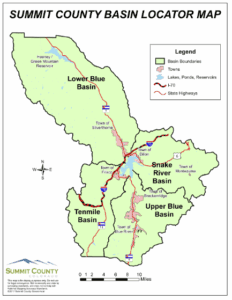
👉 Use the Summit County GIS Parcel Tool to confirm which zone applies to your property.
How Many STR Licenses Are Available?
The Resort Zone has no cap on licenses. The Neighborhood Zone does have limits, with availability varying by basin.
Zone | Cap | Status (Jan 2025) |
Resort | Unlimited | Always available |
Upper Blue | 18% (590) | Waitlist |
Lower Blue | 15% (550) | Waitlist |
Ten Mile | 6% (20) | Full (24 issued), waitlist closed until <20 |
Snake River | 5% (130) | Full (159 issued), waitlist closed until <130 |
👉 Apply for the Waitlist at the Summit County website
What Types of STR Licenses Can You Get?
In the Resort Zone: One type of license with unlimited nights and bookings.
In the Neighborhood Zone:
Type I – For primary residences. Type I License is designed for owners who are renting out a portion of their home or renting their property when they are away.
Type II – For non-primary residences. All other properties wanting to be used as a short term rental in the Neighborhood Overlay Zone must apply for a Type II license.
How Many Nights Can You Rent Your Property?
Resort Zone: Unlimited bookings and nights.
Neighborhood Zone: Limited to 35 bookings per year (any length of stay).
How Many People Can You Rent Your Home to?
Resort Zone:
Occupancy = 2 per bedroom + 4 extra OR 1 person per 200 sq ft, whichever is greater.
Homes on Septic are limited to 2 per bedroom.
Rentals with 20+ guests may need a Conditional Use Permit.
Neighborhood Zone:
Occupancy = 2 per bedroom + 2 extra.
Homes on Septic are limited to 2 per bedroom.
How Much Does a Short-Term Rental License Cost?
Licenses renew annually and expire September 30 each year. They are non-transferable.
License Type | Annual Fee |
Resort | $290 |
Type I | $235 |
Type II | $355 |
What happens to pre-existing license upon sale?
Licenses are non-transferable and you should consult the county if you change the ownership of your property to an LLC or Trust.
What Other Rules Should Owners Know?
Responsible Agent – Must be available 24/7 and respond to complaints within 1 hour.
Trash & Parking Plans – May be required depending on property.
Septic Inspections – Mandatory if the home is on a septic system.
Taxes – Airbnb and VRBO collect/remit required lodging taxes on your behalf.
Link to find more information click HERE or view the Ordinances HERE
Key Takeaways
STR licenses are required for rentals under 30 days.
Resort Zone = most flexible, unlimited licenses and nights.
Neighborhood Zone = capped licenses, 35 bookings per year.
All licenses expire on September 30 and are non-transferable.
📌 We’re here to help: STR rules can be confusing, and the difference between Resort and Neighborhood zones is critical. Our team has deep experience guiding buyers, sellers, and investors through the process. If you’re considering purchasing or managing a short-term rental in Summit County, reach out to us first so you can make the most informed decisions.
Short Term Rental Rules in the Town of Blue River
The Town of Blue River is located south of Breckenridge and is only about 2.5 square miles in geographic area. They currently have a very simple system without a lot of nuances. The number of licenses is at 23% of total housing units right now. Once they get closer to 30%, they may vote on restrictions.
👉 Check Blue River’s Official STR Page
Anyone who wishes to rent their home 30 days or less per month, must obtain a Short-Term Rentals | Town of Blue River from the town of Blue River.
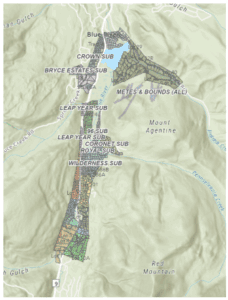
Is This Area Broken Down into Districts or Zones?
No, the entire town is one area and follows the same rules regarding short term rental licensing.
How Many STR Licenses Are Available?
Blue River does not currently have a cap on the number of licenses.
What Type of STR Licenses Can You Get?
There is only one type of short term rental license in Blue River. Properties outside of the town limits must follow the rules for Summit County regarding short term rentals.
How Many Nights Can You Rent Your Property?
There is presently no cap on the number of nights allowed to rent throughout the year. However, any license holder must rent their home a minimum of 10 days each year to be eligible to maintain a short term rental license.
How Many People Can Rent Your Home?
Occupancy is regulated at 2 people per bedroom plus 2 additional people. The number of bedrooms for a property is determined by the Summit County Assessor’s Office, not necessarily by the size of the septic system.
How Much Does a Short Term Rental License Cost?
License fees are $300 for new licenses and $300 to renew.
ALL short-term rentals licenses expire on December 31st each year. Licenses do not automatically renew and require a re-application and fee.
What Happens to an Existing STR License Upon Sale?
Licenses are non-transferable and you should consult the Town of Blue River if you change the ownership of your property to an LLC or Trust.
What Other Rules Should Owners Know?
Responsible Agent – The Town requires a Responsible Agent who is available 24/7 to respond to and resolve complaints within 60 minutes.
Poster – All short term rentals within the Town of Blue River are required to post this poster inside their homes and that the information on the poster be filled out.
Taxes – The licensee (homeowner) is responsible to ensure that these taxes are paid properly regardless of any third party contract for collections. AirBnB and VRBO have agreements with the county and state to collect and remit applicable taxes. As the licensee/homeowner, you are responsible for the 3.4% to be paid directly to the Town of Blue River and to ensure your home is listed properly.
Link to find more information
You can apply for a Short Term Rental License here.
You can find more information in the Town Code, Chapter 6.
Key Takeaways
STR licenses are required for rentals under 30 days.
All licenses expire on December 31 and are non-transferable.
📌 We’re here to help: STR rules can be confusing. Our team has deep experience guiding buyers, sellers, and investors through the process. If you’re considering purchasing or managing a short-term rental in Blue River, reach out to us first so you can make the most informed decisions.
Breckenridge is a historic mountain town in Summit County, known for its world-class skiing, outdoor recreation, and small-town alpine charm. With limited housing and strong tourism demand, the town regulates short-term rentals carefully through its Accommodation Unit Licensing program to manage neighborhood impacts, support housing goals, and maintain public safety.
Check out Breckenridge’s Official Short Term Rental Page.
If you intend to rent your home, condo, or part of your property for fewer than 30 consecutive days, you must obtain an Accommodation Unit License from the Town of Breckenridge.
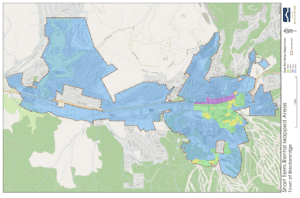
Yes, the town is broken down into four areas or zones for short-term rentals. Each area has a different number of properties that are allowed to be licensed for short-term rentals. There are four zones: Resort Zone, Zone 1 (Tourism), Zone 2 (Downtown core), and Zone 3 (Residential).
The number of short term rental licenses allowed is determined but the area or zone in which the property is located.
There is only one type of short term rental license in Breckenridge. Properties outside of the town limits must follow the rules for Summit County regarding short term rentals.
There is presently no cap on the number of nights allowed to rent throughout the year.
Occupancy is limited based on the number of bedrooms:
License holders pay a regulatory fee plus the Business & Occupational (BOLT) license tax.
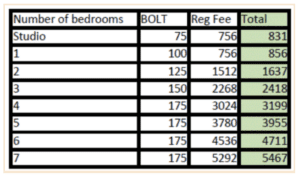
Licenses are non-transferable and expire when title of the short-term rental property transfers to a new owner. The Town of Breckenridge allows for some exceptions for title transfers if you change the ownership of your property to an LLC or Trust or for other limited reasons.
Link to find more information
You can apply for a Short Term Rental License here or apply to be placed on the waitlist.
You can find more information in Ordinance No. 29, Series 2021 and Ordinance No. 28, Series 2022.
📌 We’re here to help: STR rules can be confusing. Our team has deep experience guiding buyers, sellers, and investors through the process. If you’re considering purchasing or managing a short-term rental in Breckenridge, reach out to us first so you can make the most informed decisions.
Originally built as a stage stop and trading post on the side of the Snake River, the town of Dillon is located 70 miles west of Denver along the shores of the beautiful Dillon Reservoir, also known as Lake Dillon. The town is known for having the highest deep water marina in North America and for the Dillon Amphitheater.
Anyone who wishes to rent their home or part of their home for a period of less than 30 consecutive days, must obtain a Short Term Rental License from the town of Dillon. The regulations for short-term rentals in Dillon are governed by Ordinance 09-18, approved by the Town Council in March of 2022.
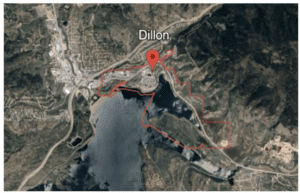
No, the entire town is one area and follows the same rules regarding short term rental licensing.
Dillon does not currently have a cap on the number of licenses.
There is only one type of short term rental license in Dillon. Properties outside of the town limits must follow the rules for Summit County regarding short term rentals. (link to county tab)
There is presently no cap on the number of nights allowed to rent throughout the year.
Occupancy is regulated at 2 people per bedroom plus an additional 2 guests per property.
License fees are $700 for new licenses regardless of when the license is obtained.
ALL short-term rentals licenses expire on May 31st each year. Licenses do not automatically renew and require a re-application and fee of $700.
Ownership of a license may not be transferred.
Link to find more information
You can apply for a Short Term Rental License here.
You can find more information in the Town Code, Ordinance No. 01-22 and Town Code, Ordinance No. 09-18.
Key Takeaways
📌 We’re here to help: STR rules can be confusing. Our team has deep experience guiding buyers, sellers, and investors through the process. If you’re considering purchasing or managing a short-term rental in Dillon, reach out to us first so you can make the most informed decisions.
Founded in 1873 and spanning just under two square miles, Frisco, Colorado is a small but vibrant town located in the heart of Summit County. With a population of around 3,000 residents, Frisco’s central location makes it an ideal base for exploring nearby ski resorts like Breckenridge, Copper Mountain, and Keystone. The town offers a walkable Main Street, a strong sense of community, and year-round access to outdoor recreation on the surrounding trails and Dillon Reservoir.
Anyone who wishes to rent their home or part of their home for a period of less than 30 consecutive days, must obtain a Short Term Rental License from the town of Frisco. The regulations for short-term rentals in Frisco are governed by Ordinance 22-10, approved by the Town Council October 11, 2022.
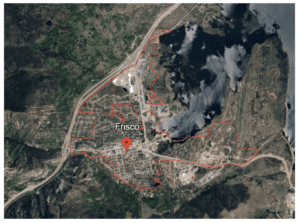
No, the entire town is one area and follows the same rules regarding short term rental licensing.
Frisco has limited the maximum number of Short-Term Rental Licenses that may be issued within the Town boundaries to 25% of the residential housing stock, allowing a maximum of 900 short-term rental licenses.
The 900 Licenses are all issued, so all subsequent applicants must fill out a form and pay a $25 fee to get on the waitlist.
There is only one type of short term rental license in Frisco. Properties outside of the town limits must follow the rules for Summit County regarding short term rentals. (link to county tab)
There is presently no cap on the number of nights allowed to rent throughout the year.
Occupancy is regulated at 2 people per bedroom plus an additional 4 guests per property.
Short-Term Rental License application fee is $250 per year. ALL short-term rentals licenses expire on April 30th each year. The town of Frisco does not prorate the short-term rental license fee.
Ownership of a license may not be transferred.
Link to find more information
You can apply for to be on Short Term Rental License waitlist here.
You can find more information in the Town Code, Ordinance No. 22-10.
Key Takeaways
📌 We’re here to help: STR rules can be confusing. Our team has deep experience guiding buyers, sellers, and investors through the process. If you’re considering purchasing or managing a short-term rental in Frisco, reach out to us first so you can make the most informed decisions.
Short Term Rental Rules in the town of Silverthorne
The Town of Silverthorne is located along I-70 at exit 205 and is situated between the Gore Range and the Continental Divide. The town has only about 3.2 square miles in geographic area. They currently have the town divided into three areas for short-term rentals. Silverthorne properties that are outside of the town limits are required to follow rental rules of Summit County. (link to our Summit COunty page)
👉 Check Silverthorne’s Official STR Page
A valid short-term rental license is required for each short-term rental property in the Town of Silverthorne. A short-term rental property is defined as “a residential dwelling unit, or any room therein, available for lease for a term of less than 30 consecutive days.”
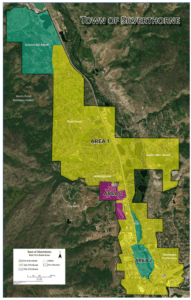
Is This Area Broken Down into Districts or Zones?
Yes, the town is broken down into three areas for short-term rentals. Each area has a different percentage of properties that are allowed to be licensed for short-term rentals.
How Many STR Licenses Are Available?
The number of short term rental licenses allowed is determined but the area or zone in which the property is located.
Area 1 comprises the majority of Town neighborhoods. Area 1 allows 10% of the properties within its boundaries to have a short-term rental license. At this time there are still short-term rental licenses available in Area 1.
Area 2 comprises neighborhoods in the Town Core and Riverfront as well as Summit Sky Ranch. Area 2 allows for 50% of the properties within its boundaries to have a short-term rental license. At this time there are still short-term rental licenses available in Area 2.
Area 3 does not allow short-term rentals. The neighborhoods in this area are deed restricted.
Short-term rentals that are owner-occupied are exempt from the licensing cap. Proof of owner occupancy shall be required with the license application.
What Type of STR Licenses Can You Get?
There is only one type of short term rental license in Silverthorne. Properties outside of the town limits must follow the rules for Summit County regarding short term rentals.
How Many Nights Can You Rent Your Property?
There is presently no cap on the number of nights allowed to rent throughout the year.
How Many People Can Rent Your Home?
The maximum occupancy for a property is two people per bedroom plus two people. All reservations and advertising needs to comply with the maximum occupancy for the property. The number of bedrooms for a property is determined by the Summit County Assessor’s Office.
How Much Does a Short Term Rental License Cost?
License fees are as follows:
ALL short-term rentals licenses expire on November 30th each year. Licenses do not automatically renew and require a re-application and fee.
What Happens to an Existing STR License Upon Sale?
Licenses are non-transferable and expire when title of the short-term rental property transfers to a new owner. You should consult the Town of Silverthorne if you change the ownership of your property to an LLC or Trust.
What Other Rules Should Owners Know?
Responsible Agent – The Town requires a Responsible Agent who is available 24/7 to respond to and resolve complaints within 60 minutes.
Taxes – The licensee (homeowner) is responsible to ensure that these taxes are paid properly regardless of any third party contract for collections. AirBnB and VRBO have agreements with the county and state to collect and remit applicable taxes. As the licensee/homeowner, you are responsible for the 3.4% to be paid directly to the Town of Blue River and to ensure your home is listed properly.
Homeowner Associations – Individual homeowner associations may have requirements, restrictions and covenants related to short-term rentals.
Duplexes – If the short-term rental property is part of a duplex, the owner of the adjoining unit is required to be provided written notice seven days prior to filing an application.
Link to find more information
You can apply for a Short Term Rental License here.
You can find more information in the Town of Silverthorne’s Ordinance, Division 3.
Key Takeaways
STR licenses are required for rentals under 30 days.
All licenses expire on November 30 and are non-transferable.
Deed Restricted Properties are prohibited from being rented on a short-term basis.
📌 We’re here to help: STR rules can be confusing. Our team has deep experience guiding buyers, sellers, and investors through the process. If you’re considering purchasing or managing a short-term rental in Silverthorne, reach out to us first so you can make the most informed decisions.
Short Term Rental Rules of the Town of Keystone
In October 2024, the Town of Keystone took over the licensing and regulation of short-term rentals within the town boundaries. Keystone Town Council passed Ordinance 2024-O-07. Adopting short term rental regulations on June 25, 2025. This ordinance is similar to the existing code in Summit County.
The Town of Keystone has a narrowly defined geographic boundary and their rules only apply to properties within their specific border.
Anyone who wishes to rent their home 30 days or less per month, must obtain a Short Term Rental License from the town of Keystone.
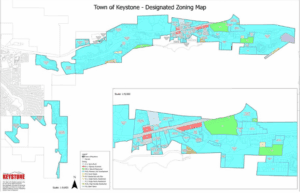
Is this broken down into districts/zones, etc?
No, the entire town is one area and follows the same rules regarding short term rental licensing.
How Many STR Licenses Are Available?
Keystone does not currently have a cap on the number of licenses.
What Type of STR Licenses Can You Get?
There is only one type of short term rental license in Keystone. Properties outside of the town limits must follow the rules for Summit County regarding short term rentals.
How Many Nights Can You Rent Your Property?
There is presently no cap on the number of nights allowed to rent throughout the year.
How Many People Can Rent Your Home?
For single family, duplex or townhomes occupancy is regulated at 2 people per bedroom plus 4 additional occupants or 1 person per 200 square feet of living area, whichever allows for greater occupancy.
For Condominium Units, occupancy is regulated at 2 people per bedroom plus 4 additional occupants, or 2 people per bedroom plus 2 additional occupants in buildings with interior egress components less than 44 inches wide and without sprinkler systems; or 1 person per 200 square feet of living area, whichever allows for greater occupancy.
A loft which meets the Buildings Department requirement for a potential sleeping room shall be allowed 2 occupants. Studios will be treated as one-bedroom units for the purposes of short-term rentals.
Short term rentals on on-site wastewater treatment systems (Septic), occupancy is limited to the capacity established on the OWTS permit, typically 2 people per bedroom.
How Much Does a Short Term Rental License Cost?
License fees are $285 for new licenses and renewals.
ALL short-term rentals licenses expire on September 30th each year. Licenses do not automatically renew and require a re-application and fee.
What Happens to an Existing STR License Upon Sale?
Ownership of a license may not be transferred.
What Other Rules Should Owners Know?
The Town requires a Responsible Agent who is available 24/7 to respond to and resolve complaints within 60 minutes.
Each license application requires submission of a parking diagram for single family, duplex, and town home units.
Require submission of direct contact numbers.
A parking pass is required to be provided upon check-in for every allowable parking space with the address or unit number of the property printed on it.
The Town of Keystone implemented a 2% lodging tax, effective on all stays beginning on January 1, 2025. This is to be remitted to the Town of Keystone.
AirBnB and VRBO have an agreement with the Town of Keystone to collect and remit taxes to them.
Keystone’s updated Good Neighbor Guidelines are required to be displayed in every rental.
Link to find more information
You can apply for a Short Term Rental License here.
You can find more information in the Town Code, Ordinance 2024-O-07.
Key Takeaways
STR licenses are required for rentals under 30 days.
All licenses expire on September 30 and are non-transferable.
📌 We’re here to help: STR rules can be confusing. Our team has deep experience guiding buyers, sellers, and investors through the process. If you’re considering purchasing or managing a short-term rental in Keystone, reach out to us first so you can make the most informed decisions.
Vail is a world-renowned mountain town in Eagle County, known for its ski resorts, alpine charm, and year-round tourism. It also faces significant housing pressure, and the town has structured its short-term rental (STR) regulations to balance economic opportunity with community stability, safety, and housing needs.
Anyone who wants to rent a residential dwelling, or part of it, in Vail for fewer than 30 consecutive days must obtain an STR license from the Town of Vail under its STR Ordinance.
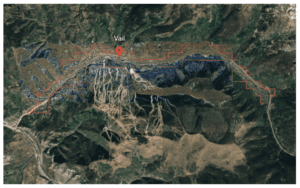
No. Vail’s STR rules apply town-wide under its ordinance. There is no separate zoning “cap by neighborhood” built into the STR license structure in the way some mountain towns do.
Vail does not appear to have a hard cap on the number of STR licenses in its ordinance. Licenses are managed through its licensing program and tied to life-safety and regulatory compliance rather than a strict quota.
Vail offers three types of STR licenses:
There is no explicit night-by-night restriction in Vail’s STR ordinance; as long as a valid license is in place, the property may be rented for any number of nights under 30-day leases.
Vail requires that STR properties meet life-safety standards, including fire code compliance, but does not publicly list a fixed “X people per bedroom” formula on its STR license page.
Owners must pass a fire inspection, per the town’s safety checklist, to qualify.
Vail’s fee structure has two parts:
Licenses currently expire on February 28, 2026.
When a short-term rental property changes ownership, the new owner must apply for a new STR license under their name. Vail’s STR licenses are not automatically transferred with property sale.
Link to find more information
You can apply for a Short-Term Rental License here.
You can find more information in the Short-Term Rental Ordinance – STR Ordinance 20230207.
Key Takeaways
📌 We’re here to help: STR rules can be confusing. Our team has deep experience guiding buyers, sellers, and investors through the process. If you’re considering purchasing or managing a short-term rental in the Town of Vail, reach out to us first so you can make the most informed decisions.
Avon is a resort town in Eagle County known for its mountain-village character, ski accessibility, and year-round visitor traffic. Because of its small-town feel and limited housing, Avon regulates short-term rentals with zoning, licensing, and taxes to support community housing and maintain neighborhood quality.
If you want to rent your property (or part of it) in Avon for fewer than 30 days, you must obtain the proper STR business license from the Town of Avon and comply with zoning, safety, and tax requirements.
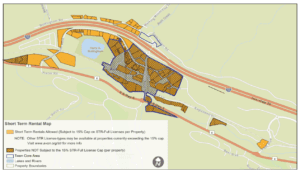
Yes. Avon uses a Short-Term Renal Overlay (STRO) district under its municipal code. Properties must lie within this overlay to be eligible for STR licensing. There is a distinction between properties inside the “Town Core” versus outside it.
Properties inside the Town Core are not subject to limits on STR Licenses.
For “full” STR licenses outside the Town Core, Avon limits them to 15% of the total number of residential units in those overlay areas.
Avon offers three types of STR licenses:
For STR-Full licenses, there is no maximum night count; the unit can operate year-round (subject to license).
The STR-Limited license (42-day limit) caps how many total days per year the unit can be rented.
Licenses are renewed annually via Avon’s licensing system
Avon requires that STR properties meet life-safety standards, including fire code compliance, but does not publicly list a fixed “X people per bedroom” formula on its STR license page.
The ordinance includes management requirements such as a responsible agent, occupancy limits, and guest notification. Owners must sign an affidavit as part of their STR license application acknowledging these safety and management standards.
Avon’s STR license fees are tiered based on license type / property:
When a short-term rental property changes ownership, the new owner must apply for a new STR license under their name. Avon’s STR licenses are not automatically transferred with property sale.
Link to find more information
You can apply for a Short-Term Rental License here.
You can find more information in the Short-Term Rental Ordinance – STR Ordinance 20230207.
Key Takeaways
📌 We’re here to help: STR rules can be confusing. Our team has deep experience guiding buyers, sellers, and investors through the process. If you’re considering purchasing or managing a short-term rental in the Town of Avon, reach out to us first so you can make the most informed decisions.
Beaver Creek is a private resort community managed by the Beaver Creek Resort Company (BCRC), located in unincorporated Eagle County. The resort company provides key services like road maintenance, security, and village amenities, funded in part through assessments on short-term rentals. As a result, operating an STR in Beaver Creek requires compliance with BCRC’s business license and assessment rules.
If you rent your Beaver Creek property for more than 4 days in a month, you must obtain a Beaver Creek Lodging Business License from BCRC, and pay both civic and lodging assessments.
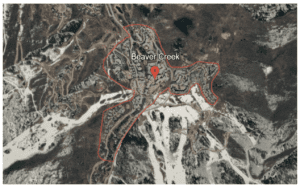
No. Beaver Creek does not have separate STR zones like a city zoning map for STR-only areas. STR licensing is managed by BCRC, not by a municipal planning/zoning department, because Beaver Creek is not its own town but part of unincorporated Eagle County.
There is no publicly stated license cap for STRs in Beaver Creek via BCRC’s business license regulation. As long as a property meets the licensing and assessment requirements, it appears eligible to operate as an STR through BCRC.
Beaver Creek requires a Lodging Beaver Creek Business License from BCRC for STRs, not a city-style “STR permit.” This license is required if a property is rented for more than 4 days in a month.
If a homeowner or HOA is managing multiple units, the license is per HOA building, not per individual unit (so long as they share the same building).
There is no stated maximum number of nights per year for STRs under BCRC’s rules, beyond the 4-day-per-month threshold for requiring the lodging license.
If a rental is 30 days or more to the same person or entity, it is considered a long-term rental and is not subject to the BCRC short-term lodging assessments.
BCRC’s public STR/licensing information does not specify a fixed occupancy formula (e.g., “X people per bedroom”) on its STR or business-license web pages.
Life-safety, fire code, or HOA-specific occupancy may apply depending on each building’s rules, but BCRC does not centrally enforce a “maximum guest number” through its STR business license.
The specific business license fee for a Lodging STR through BCRC is not broken out separately on the assessment / license page, instead, the key costs are the civic and lodging assessments.
BCRC’s assessments:
Licensees also must apply via BCRC’s Business License Regulation.
The Lodging Business License from BCRC is required per building (HOA), not necessarily per owner, so if a property in an HOA is sold, the structure of licensing may stay within that HOA’s license if they already have one.
However, any new owner should verify licensing and assessment obligations with BCRC, since they remain responsible for submitting their civic and lodging assessments.
Link to find more information
To help set up your accounts, email: businesslicense@vailresorts.com.
You can find more information in the Beaver Creek Resort Company Annual Business License Regulation.
Key Takeaways
📌 We’re here to help: STR rules can be confusing. Our team has deep experience guiding buyers, sellers, and investors through the process. If you’re considering purchasing or managing a short-term rental in Beaver Creek, reach out to us first so you can make the most informed decisions.
Eagle County is a resort-mountain county that includes unincorporated communities such as Eagle-Vail, Beaver Creek, and Arrowhead. While many towns in the county (Vail, Avon, etc.) have STR regulation, the county itself has considered but not fully implemented a robust STR licensing ordinance as of the most recent reports.
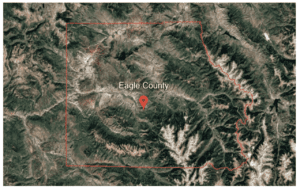
Not in the traditional “zoning cap” way under countywide STR regulation, because a binding STR licensing ordinance has not been fully adopted.
There are ongoing discussions about regulating short-term rentals in unincorporated Eagle County, but as of the latest, officials opted for a “light approach” rather than strict licensing.
Vail Daily
Much of the STR impact in unincorporated areas comes from resort communities (Beaver Creek, Arrowhead, etc.), which already have their own internal STR or lodging regulation systems.
Because the county has not yet fully rolled out a license-based STR program, there is no set cap on STR licenses at the county level right now.
Because the ordinance is draft / proposed, there is no “license type system” fully in force yet (as of the most recent news).
The draft ordinance (if adopted) would require what they call a Short-Term Rental License for “Lodging Units” rented under 30 days. The license would apply to “Lodging Units,” but not to “Hotel Units” or leases that are 30+ days.
Since the county-level STR licensing program is not fully adopted, there is no final county-wide limit on how many nights a STR can operate.
The draft ordinance requires health and safety standards, and owners / licensees would need to comply with on-site wastewater (septic) system regulations.
Under a proposed version of the ordinance, the estimated fee is about $300/year per unit.
Because there is no fully adopted permanent “license” system currently in force, there is no definitive county-wide rule yet on license transfer.
Under the draft, a license would not necessarily be a “vested right” — issuance is discretionary, meaning it’s not guaranteed to carry forward as a property “right.”
Link to find more information
You can find more information in the Draft Short Term Rental Ordinance.
Key Takeaways
📌 We’re here to help: STR rules can be confusing. Our team has deep experience guiding buyers, sellers, and investors through the process. If you’re considering purchasing or managing a short-term rental in the Town of Eagle-Vail or unincorporated Eagle County, reach out to us first so you can make the most informed decisions.
Leadville, Colorado is one of the highest incorporated cities in the United States, nestled in Lake County at over 10,000 feet elevation. With a rich mining history and a small but vibrant community, Leadville attracts outdoor adventurers year-round. The city has carefully crafted short-term rental (STR) regulations to balance tourism, neighborhood character, and public safety.
Anyone who wants to rent their property (or part of it) in Leadville for fewer than 30 consecutive days must obtain a Short-Term Rental License from the City of Leadville. The program is governed by city code (Chapter 5.12) and administered through the City Clerk’s office.
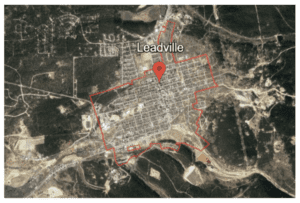
No. The STR regulations in Leadville apply citywide; there is no separate zoning system for STR areas.
The city imposes a cap on the number of certain STR licenses: 12% of all residential parcels (165 STR license limit).
New applications are handled first-come, first-served. If licenses under the cap are not available, complete applications are placed on a waitlist.
There are two classes of Short-Term Rental licenses in Leadville:
The license is valid for a full license year (May 1 – April 30) and must be renewed annually.
There is no explicit limit on the number of nights per year that a licensed STR can operate.
Leadville does not publish a fixed numerical occupancy formula (such as people-per-bedroom), but occupancy is reviewed as part of submitted with the STR application.
The STR Permit Application Fee is $325.
A fire safety check (conducted by the Fire Marshal) costs $50 each time.
The STR license must be renewed annually by April 30.
Short-term rental licenses are not transferrable. If the owner (or business entity) holding the STR license changes, the new owner must apply for a new license within 30 days of the change.
Link to find more information
You can apply for to be on Short Term Rental License here.
You can find more information in the Ordinance No. 4, Series of 2022 – Short Tern Rental Rules & Regulations.
Key Takeaways
📌 We’re here to help: STR rules can be confusing. Our team has deep experience guiding buyers, sellers, and investors through the process. If you’re considering purchasing or managing a short-term rental in Leadville, reach out to us first so you can make the most informed decisions.
Lake County is a high-alpine mountain county in central Colorado, home to Leadville and expansive rural areas, lakes, and historic mining communities. Known for its scenic beauty, outdoor recreation, and seasonal tourism, the county has adopted a regulatory framework for short-term rentals (STRs) to balance housing, visitor demand, and community character.
If you want to rent your property (or part of it) for fewer than 30 consecutive days, you must obtain a Short-Term Rental License from Lake County’s Community Planning & Development Department.
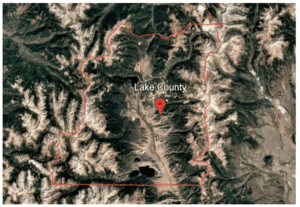
Yes and no. STR rules apply to specific zoning districts under Lake County’s Land Development Code. The ordinance defines allowed STR use in AF, AR, UR, RM, RC, B, R, certain PUDs, and previously developed RUR, CI, or IM zones.
There is also a Community Housing Overlay, which places a further cap of only 19 “Standard” STR licenses in that area.
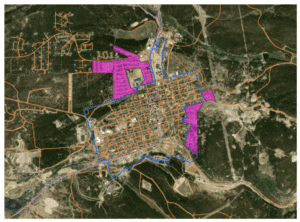
Lake County has two classes of STR licenses:
There is no maximum limit on how many nights you can rent out an STR under either license type, according to Lake County’s STR regulations.
Lake County does not publish a fixed numerical occupancy formula (such as people-per-bedroom).
According to the Planning & Development application form, the initial license application fee is $125.00. Please email str@lakecountyco.gov complete applications and general inquiries. Do not submit an application without all requirements.
A Fire Safety Check Report is required every three years. The fee is $50.
Short-term rental licenses are not transferable between property owners or location. In the event the property is sold or not renewed by the deadline specified, the license shall terminate.
Link to find more information
You can apply for a Short Term Rental License here.
You can find more information in the Short-Term Retal Regulations – Approved 2/28/24.
Key Takeaways
📌 We’re here to help: STR rules can be confusing. Our team has deep experience guiding buyers, sellers, and investors through the process. If you’re considering purchasing or managing a short-term rental in Lake County, reach out to us first so you can make the most informed decisions.
Founded in 1859 during Colorado’s gold-rush era, Fairplay is the county seat of Park County and sits at an elevation of 9,953 feet. With a population of roughly 800 residents, Fairplay is known for its historic South Park City, outdoor recreation, and small-town mountain character. The town serves as a gateway to hiking, fishing, hunting, and scenic byways across Park County.
Anyone wishing to rent their home or part of their home for a period of fewer than 30 consecutive days must obtain a Short-Term Rental License from the Town of Fairplay. Short-term rentals in Fairplay are regulated by Ordinance No. 4, Series of 2022, adopted March 21, 2022.
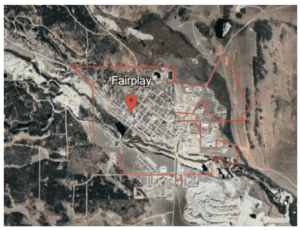
No. The Town of Fairplay does not divide STR licensing into separate zones. The entire town follows one unified set of Short-Term Rental regulations. STR rules apply only to properties within Fairplay town limits served by Town water and sewer.
Properties on well and septic fall under Park County’s STR regulations instead.
Fairplay limits the total number of STR permits to 6.5% of its total residential housing units as of 2022. This results in a maximum of 20 STR permits allowed within the Town. As of June 2025, 10 of the 20 permits have been issued.
Applications are processed first-come, first-served, and the Town does not maintain a waiting list.
There is only one type of short term rental license in Fairplay. Properties outside of the town limits must follow the rules for Summit County regarding short term rentals. (link to county tab)
There is presently no cap on the number of nights allowed to rent throughout the year.
Fairplay does not publish a fixed numerical occupancy formula (such as people-per-bedroom), but occupancy is reviewed as part of the site plan and floor plan submitted with the STR application and must comply with:
The Town and North-West Fire Protection District may require adjustments if a property does not meet safe occupancy levels.
The STR Permit Application Fee is $250.
A Town of Fairplay Business License is also required for every STR. The annual business license fee is $100.
All STR permits must be renewed annually, and renewal requires submitting a notarized affidavit detailing your previous year’s rental activity and confirmation of paid taxes.
Ownership of a license may not be transferred. If a property with a Short-Term Rental license is sold, the new owner must apply for a new permit, subject to the availability of the allowed permits.
Link to find more information
You can apply for a Short Term Rental License here.
You can find more information in the Ordinance No. 4, Series of 2022 – Short Tern Rental Rules & Regulations.
Key Takeaways
📌 We’re here to help: STR rules can be confusing. Our team has deep experience guiding buyers, sellers, and investors through the process. If you’re considering purchasing or managing a short-term rental in Fairplay, reach out to us first so you can make the most informed decisions.
Founded in 1861, Park County is one of Colorado’s original 17 counties and spans more than 2,100 square miles across high-alpine valleys, historic mining towns, and vast public lands. With a population of just over 17,000 residents, Park County includes communities such as Fairplay, Alma, Bailey, and Hartsel, along with extensive rural and recreational areas. Its central Colorado location offers easy access to outdoor recreation, scenic byways, national forest lands, and wide-open mountain landscapes.
Anyone who wishes to rent their home or part of their home for a period of fewer than 30 consecutive days in unincorporated Park County must obtain a Short-Term Rental License from the County. Short-term rentals in the unincorporated areas are governed by the Park County Short-Term Rental Ordinance and related administrative regulations.
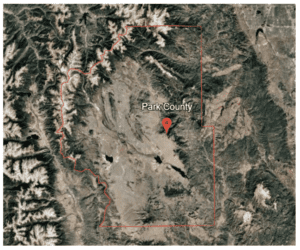
No. All STR properties in unincorporated Park County follow the same rules and licensing requirements.
Individual towns such as Fairplay and Alma have their own separate STR rules, but those do not apply to county-issued licenses.
Park County does not set a limit on how many Short-Term Rental licenses may be issued. Any property in the unincorporated county that meets the application, safety, and septic requirements may apply.
Park County issues one type of Short-Term Rental license for properties rented for fewer than 30 days.
However, owners fall into different licensing pathways based on compliance history:
Both paths apply to the same property type; the difference lies in fees and renewal requirements.
There is no restriction on the number of nights a property may be rented each year. Owners may rent as frequently as they choose, provided they maintain an active license and meet all operational requirements.
Park County does not use a simple formula like “two people per bedroom.”
Instead, occupancy is determined by:
Owners must submit a detailed floor plan and septic documentation, and the county may adjust maximum occupancy to ensure safe use.
Fees vary depending on the licensing path:
Additional costs may apply:
Due to an inordinate number of short-term rental license applications requiring processing, only completed applications will be accepted. Should your application be rejected due to incompleteness, a new application, along with a non-refundable application fee of $605, will be required.
STR licenses in Park County are not automatically transferable.
If a property is sold:
Inspections verify detectors, egress, fire extinguishers, and overall safety conditions.
Link to find more information
You can apply for a Short Term Rental License here.
You can find more information in the Ordinance No 20-03 Short-Term Rentals and Ordinance 21-01 Fixing Fees for Short-Term Rental Property Licenses in Park County.
Key Takeaways
📌 We’re here to help: STR rules can be confusing. Our team has deep experience guiding buyers, sellers, and investors through the process. If you’re considering purchasing or managing a short-term rental in Park County, reach out to us first so you can make the most informed decisions.