
TL;DR
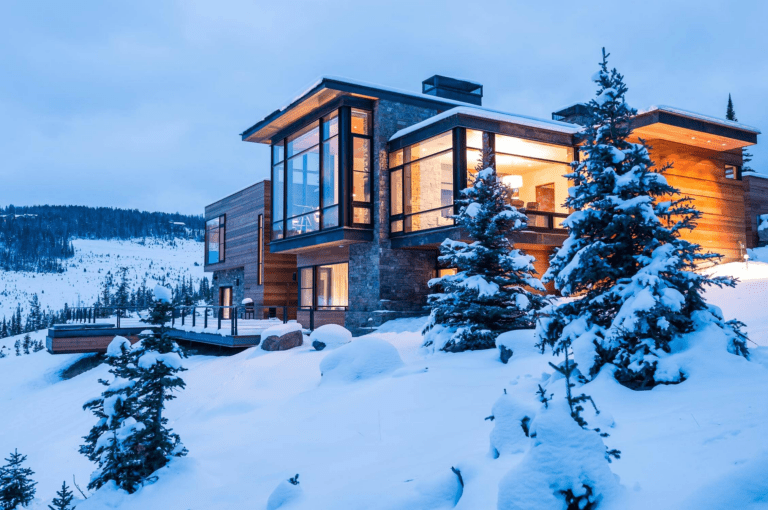
In 2026, the most desirable homes are not the largest or most ornate. They are the ones that feel the most connected to the land, to the light, and to the way people actually want to live.
The heavy, dark lodge aesthetic that defined Colorado mountain homes for decades is giving way to something warmer, quieter, and more intentional. The defining design story of 2026 is homes that feel deeply connected to their landscape without announcing it. Natural materials, grounding earth tones, wellness-centered spaces, and indoor-outdoor living that erases the line between inside and out.
For a long time, the shorthand for a Colorado mountain home was predictable: dark wood, stone fireplace, antler chandelier, plaid everything. That aesthetic had its moment and its logic. It said cabin, it said ski lodge, it said warmth against a cold season.
In 2026, the luxury buyers coming into Summit County and Eagle County have a different vocabulary. They still want warmth. They still want connection to the landscape. But they want it expressed through restraint, craft, and materials that feel like they belong where they are rather than imported from a Western furniture catalogue. The result is a design direction that is genuinely exciting and, from a real estate perspective, one that is directly shaping what buyers will pay for and what they will walk away from.
The shift is away from dark, heavy, cabin-style interiors and toward what designers are calling quiet luxury in the mountains. Clean architectural lines softened by texture and natural light. Rooms that feel organized and intentional rather than layered with decor. Materials that age well rather than date quickly.
Publications like Haven Lifestyles have highlighted this shift as a defining characteristic of high-end mountain living, where restraint is now a luxury in itself.
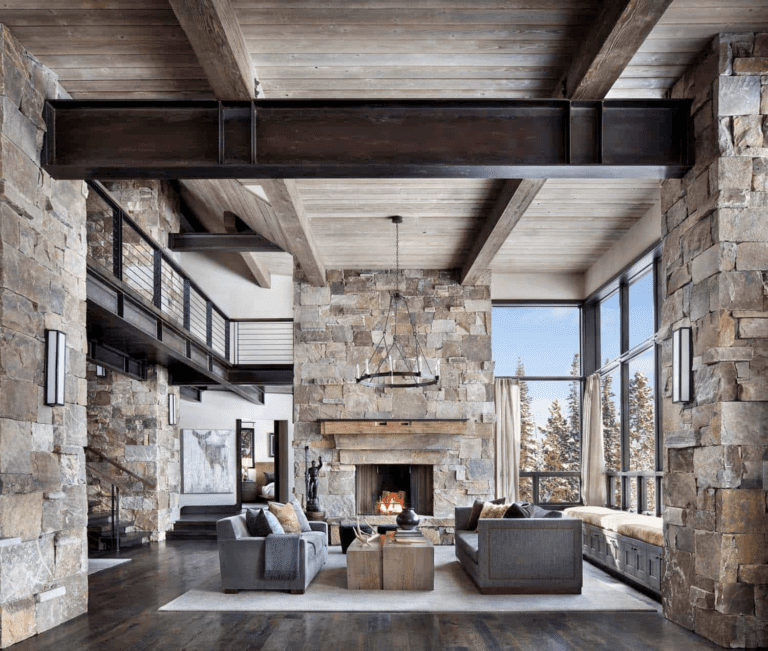
This does not mean cold or minimal. The warmest rooms being designed right now in Breckenridge and Vail are full of texture, just expressed through restraint. A wall of beetle kill pine from Colorado. Hand-laid stone that flows from the fireplace surround into the floor. Custom millwork in warm walnut. The material is doing the work, not the objects placed in front of it.
Color: The Palette Has Shifted
Cool gray, the dominant mountain home palette of the 2010s, has largely run its course in the luxury segment. The color story in 2026 is grounded in terrain. Warm browns, clay tones, muted sage, mineral-inspired neutrals, and creamy whites that photograph well and read as timeless rather than trendy.
Accent colors are appearing through the architecture itself, through the warm bronze of a railing detail, through the blackened steel of a range hood, through a brass fixture that catches light without demanding attention. The walls are quiet so that the mountains visible through the glass can do what they are meant to do.
Sherwin-Williams and Benjamin Moore trend forecasts for 2026 align with what local designers are actually specifying: comfort colors rooted in the earth, chosen to make homes feel connected to the ground beneath them rather than floating above it.
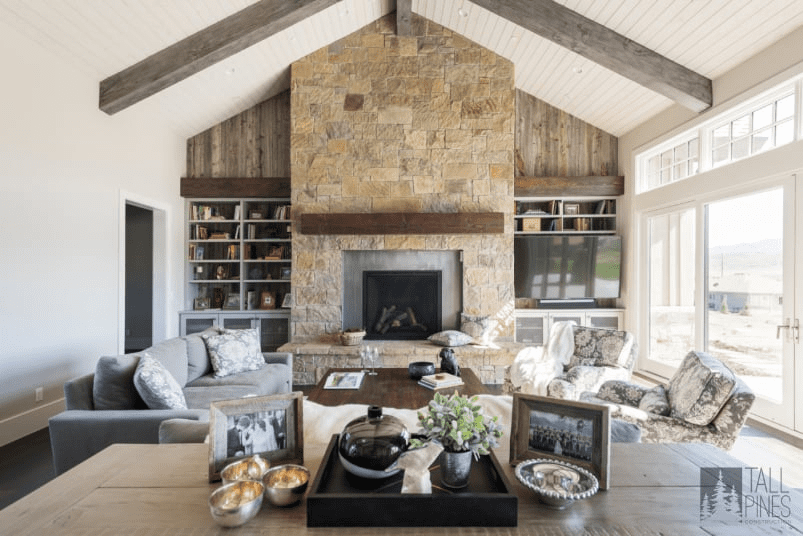
Authenticity is the word you hear most from the designers and architects working in the Summit County and Vail Valley corridor right now. Materials should feel like they came from somewhere real, not from a big box store showroom.
That means reclaimed timber with visible grain and history. Locally sourced stone that matches what the mountains outside are made of. Beetle kill pine, with its distinctive blue-gray tint, used for interior paneling and flooring in a way that connects the home to Colorado’s landscape rather than masking it. Handcrafted ceramic tile in bathrooms and kitchens. Quartzite countertops that carry the weight and variation of natural stone.
These materials also have a real estate logic beyond aesthetics. They age gracefully. They require less updating to feel current than trend-driven finishes. And they signal to an educated buyer that someone made considered choices when building or renovating.
In 2026, the most sought-after mountain homes in Breckenridge, Keystone, Frisco, Silverthorne, Dillon, Vail, and Beaver Creek share one design feature above all others: the line between inside and outside has been deliberately erased.
Large sliding or retractable glass walls that open to covered decks and patios. Outdoor fireplaces positioned for evening use. Heated outdoor dining areas that extend the usable season. Fire features and built-in grills that make the deck as functional as the kitchen. Hot tubs and spa soaking areas positioned to face the best views rather than the neighbor’s fence.
This is not a cosmetic feature. It is a fundamental shift in how mountain homes are designed and how buyers evaluate them. A property with a well-executed indoor-outdoor connection commands a premium that a comparable property without it simply cannot match.
The wellness-centered home has moved from trend category to expectation in the luxury mountain segment. Buyers are not adding a Peloton to a guest bedroom and calling it a gym. They are looking for homes with dedicated wellness rooms designed from the start for purpose.
Home gyms with proper ceiling height, rubber flooring, and natural light. Infrared saunas. Cold plunge setups. Steam showers. Primary bathrooms that function as genuine retreat spaces, with layered lighting, freestanding soaking tubs, and material choices that create calm rather than stimulation.
The logic is straightforward: people who own a mountain home in Summit County or Eagle County are often coming from high-pressure professional lives in Denver, Dallas, or Chicago. The property is supposed to restore them. A home that supports that purpose, architecturally, commands the attention of serious buyers in a way that a beautiful but purely aesthetic home does not.
If you are buying a luxury property in Summit County or Eagle County in 2026, these trends are your filter. A property with natural materials, a well-executed indoor-outdoor connection, and wellness-oriented primary spaces will hold its value better over time and will be easier to sell when your circumstances change. A property that is frozen in the dark-lodge aesthetic of 2005 will require either a significant renovation budget or a significant price concession to move.
You can explore current Summit County listings to see how design trends are showing up across active luxury inventory.
If you are selling, this is your pre-listing checklist. You do not need to renovate the entire home. But updating light fixtures, replacing heavy window treatments with cleaner options that frame the views, and addressing the primary bath and kitchen finishes can shift how a buyer perceives the entire property.
Anne Skinner and The Skinner Team understand how design choices translate to market value in this specific geography. If you are preparing to list or evaluating a purchase and want a straightforward read on how a property’s design choices will land with today’s buyers, that is exactly the kind of conversation we have.
Mountain modern is a design approach that combines the warmth and natural materials associated with traditional mountain homes with cleaner architectural forms and more restrained decoration. In 2026, it is characterized by natural stone, reclaimed timber, warm earth-tone palettes, large glass walls that connect to the outdoors, and wellness-centered spaces. It feels luxurious and grounded rather than rustic or decorative.
Indoor-outdoor living features, including retractable glass walls, covered heated decks, and outdoor fireplaces, consistently command the strongest premiums in Summit County and Eagle County. After that, primary suite renovations that create genuine spa-quality bathrooms, kitchen updates using natural stone and quality appliances, and dedicated wellness spaces all have meaningful impact on both buyer interest and final price.
Heavy, dark, rustic interiors are falling out of favor with luxury buyers in Summit County and Eagle County. Buyers are gravitating toward warmer but lighter palettes, natural materials used with restraint, and spaces that feel intentional rather than layered. Homes with older dark interiors are not unsellable, but they are increasingly being discounted relative to properties that reflect current design direction.
Warm clay tones, muted sage greens, mineral-inspired neutrals, creamy whites, and rich warm browns are defining the luxury mountain palette in 2026. The goal is a connection to the terrain outside the windows. Cool grays and stark whites, which dominated the previous decade, are giving way to colors that feel grounded and textural.
Look for natural materials used authentically, not just decoratively. Assess the indoor-outdoor connection: is there a real relationship between interior spaces and the outdoors, or is the deck an afterthought? Evaluate the primary suite for wellness potential. And consider the bones: good architecture with clear sightlines to views will support any design evolution, while a poorly oriented property cannot be fixed with renovation.
Design matters, and The Skinner Team knows how to read a property’s design strengths and limitations in the context of the current market. Browse current listings at COMtnRealty.com or connect with Anne Skinner directly at 970.389.6987 to start a conversation about what you are looking for.




Disclaimer: All information contained in this web site is deemed reliable but not guaranteed. All properties are subject to prior sale, change or withdrawal notice. COMtnRealty.com believes all information to be correct but assumes no legal responsibility for accuracy.


