
TL;DR: Active listings across Summit County typically reach their highest point of the year in late summer, giving buyers more to compare and more room to negotiate than they will find once winter demand tightens the market again. Here is a framework for evaluating opportunities while that window is open.
As of the June 2026 Market Update, active listings across Summit County stood at 916, close to double the winter low of roughly 495 to 510 homes the corridor typically sees once ski season demand absorbs available inventory. That gap is not a coincidence. It repeats every year, and it means the number of homes a buyer can realistically compare right now is meaningfully larger than it will be in a few months. The seven points below walk through how to actually evaluate that opportunity, not just note that it exists.
Peak inventory does not mean the market is soft. It means selection is wide. With 916 active listings on the books as of the June 2026 Market Update, buyers working across Breckenridge, Frisco, Keystone, Dillon, Silverthorne, Copper Mountain, Vail, and Beaver Creek have more to compare side by side than at almost any other point in the year. That matters most for buyers who have been narrowing a list of criteria, ski access, HOA structure, rental potential, proximity to Lake Dillon or the Vail Valley, since a wider pool makes it easier to find a property that actually checks most of those boxes rather than settling for whichever listing happens to be available.
More listings do not automatically mean distressed sellers or dramatic price cuts. The same June 2026 Market Update that reported 916 active listings also showed a list-to-sale price ratio of 97.9 percent and a median 51 days on market, both signs of a market where sellers are still receiving offers close to asking price and homes are still moving at a reasonable pace. What peak inventory changes is choice and pacing, not seller desperation. A buyer gets more properties to evaluate and slightly more time to make a decision without the property disappearing under a competing offer, not a market full of underpriced homes waiting to be picked off. For the most current version of these figures, our Latest Summit County Market Stats page updates on an ongoing basis.
Inventory this size will not hold. As ski season approaches, active listings historically taper back down toward the 495 to 510 range the corridor sees in the depths of winter, and that contraction tends to bring tighter competition along with it. Buying during quieter seasons or periods of lower competition can improve negotiating leverage and future returns, a pattern that holds whether the property is a primary residence or an investment. Buyers who wait for a specific listing to feel perfect while the broader pool is still large are often trading a wide field of comparable options for a narrower one later, without any guarantee that the property they were watching will still be available.
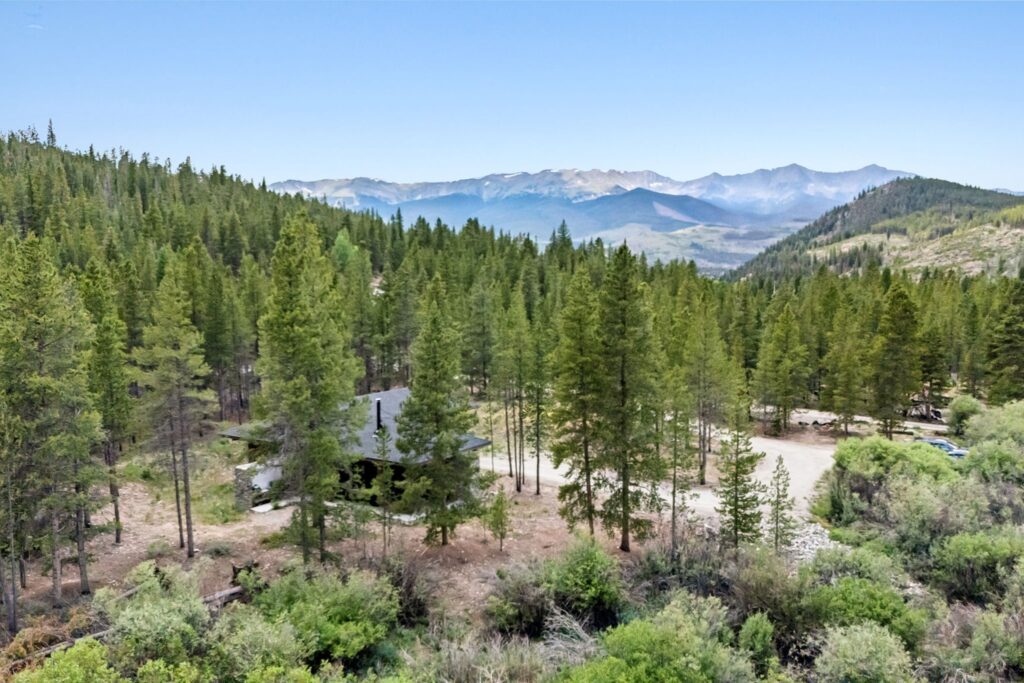
A wide pool of listings is only useful if it is evaluated with the right level of detail. Neighborhood dynamics, zoning, and HOA rules can vary widely between towns and even within the same community, which means a property in Breckenridge and a similarly priced property in Keystone can carry very different rules around rentals, exterior changes, or future development nearby. Buyers comparing multiple listings during a high-inventory window should treat each town, and in some cases each subdivision, as its own set of variables rather than assuming what applies to one listing applies to the next one on the list.
For buyers considering a short-term rental as part of the purchase, a high-inventory window is a useful time to compare listings on rental performance, not just price. Ask for actual trailing rental income rather than relying on a listing’s projected potential, and confirm the property’s short-term rental licensing status before making an offer, since requirements vary by town and by unincorporated area within Summit County. Our Summit County Short-Term Rental Rules guide covers the licensing and compliance details buyers should check before assuming a property’s rental income will hold up as advertised.
Comparing more properties across more towns takes more coverage, and that is one of the practical reasons buyers in this corridor work with a team rather than a single agent. A team brings broader collective knowledge of the towns, listings, and market patterns across Summit and Eagle County than any one person can hold alone, and it means a buyer’s search keeps moving even if the specific agent they have been working with is traveling or unavailable for a stretch. That continuity matters most during exactly the kind of high-inventory window covered here, when the properties worth seeing can turn over quickly and a delay in response is the difference between touring a property and hearing it already has an offer.
A wide selection of listings is an advantage only if it is used deliberately. Buyers who go into a high-inventory window with a clear list of priorities, town, rental use, HOA tolerance, budget ceiling, tend to move faster and negotiate better than buyers who are still figuring out what they want while touring. Our Current Listings page reflects what is actually available right now across the corridor, and a Home Valuation is a useful reference point if a purchase also involves selling or trading up from an existing property.
What does it mean when Summit County real estate inventory peaks?
It means the number of active listings on the market has reached its highest point of the year, giving buyers more properties to compare at once. As of the June 2026 Market Update, active listings stood at 916, compared with a typical winter low of roughly 495 to 510 homes once ski season demand tightens the market.
Does more inventory mean lower prices in Summit County?
Not necessarily. The same June 2026 data that showed 916 active listings also showed a list-to-sale price ratio of 97.9 percent, meaning sellers were still receiving offers close to asking price. Higher inventory generally means more selection and slightly more time to decide, not steep discounts.
How long do homes stay on the market in Summit County right now?
As of the June 2026 Market Update, the median time on market across Summit County was 51 days. Buyers should confirm current figures on our Latest Summit County Market Stats page, since days on market shifts with inventory levels through the year.
Does inventory vary by town in Summit County?
Yes. Neighborhood dynamics, zoning, and HOA rules can vary widely between towns and even within the same community, so buyers comparing listings during a high-inventory window should evaluate each town, and often each subdivision, on its own terms rather than assuming consistent rules corridor-wide.
Should I buy a short-term rental property when inventory is high?
A high-inventory window is a good time to compare rental listings side by side, but buyers should ask for actual trailing rental income rather than projected potential, and confirm licensing status before making an offer. Requirements vary by town and by unincorporated area within Summit County, as covered in our Short-Term Rental Rules guide.
Why work with a real estate team instead of a solo agent when buying in Summit County?
A team brings broader collective knowledge of listings and market patterns across Summit and Eagle County, and it means a buyer’s search keeps moving even when a specific agent is traveling or otherwise unavailable. That continuity matters most during high-inventory windows, when properties worth seeing can turn over quickly.
Ready to see what is actually available right now?
Anne Skinner and The Skinner Team can walk through current inventory across Summit County and Eagle County and help you evaluate opportunities while this window is open.
Get a Home Valuation | Contact The Skinner Team
© 2026 The Skinner Team | 970-547-0545 | COMtnRealty.com




Disclaimer: All information contained in this web site is deemed reliable but not guaranteed. All properties are subject to prior sale, change or withdrawal notice. COMtnRealty.com believes all information to be correct but assumes no legal responsibility for accuracy.


